
+8618651204359
info@jarayco.com
8618651204359

Facebook
Twitter
Google+
LinkedIn
Pinterest

  • Home
  • About Us
  • Products
    • Ring Dies
    • Pellet Machine
    • Equipment
    • Roller Shells
    • Accessories
    • Featured Products
  • News
  • Contact
  • Feedback
  • Download

Feed Crumblier

Home Equipment Feed Crumblier

Feed Crumblier

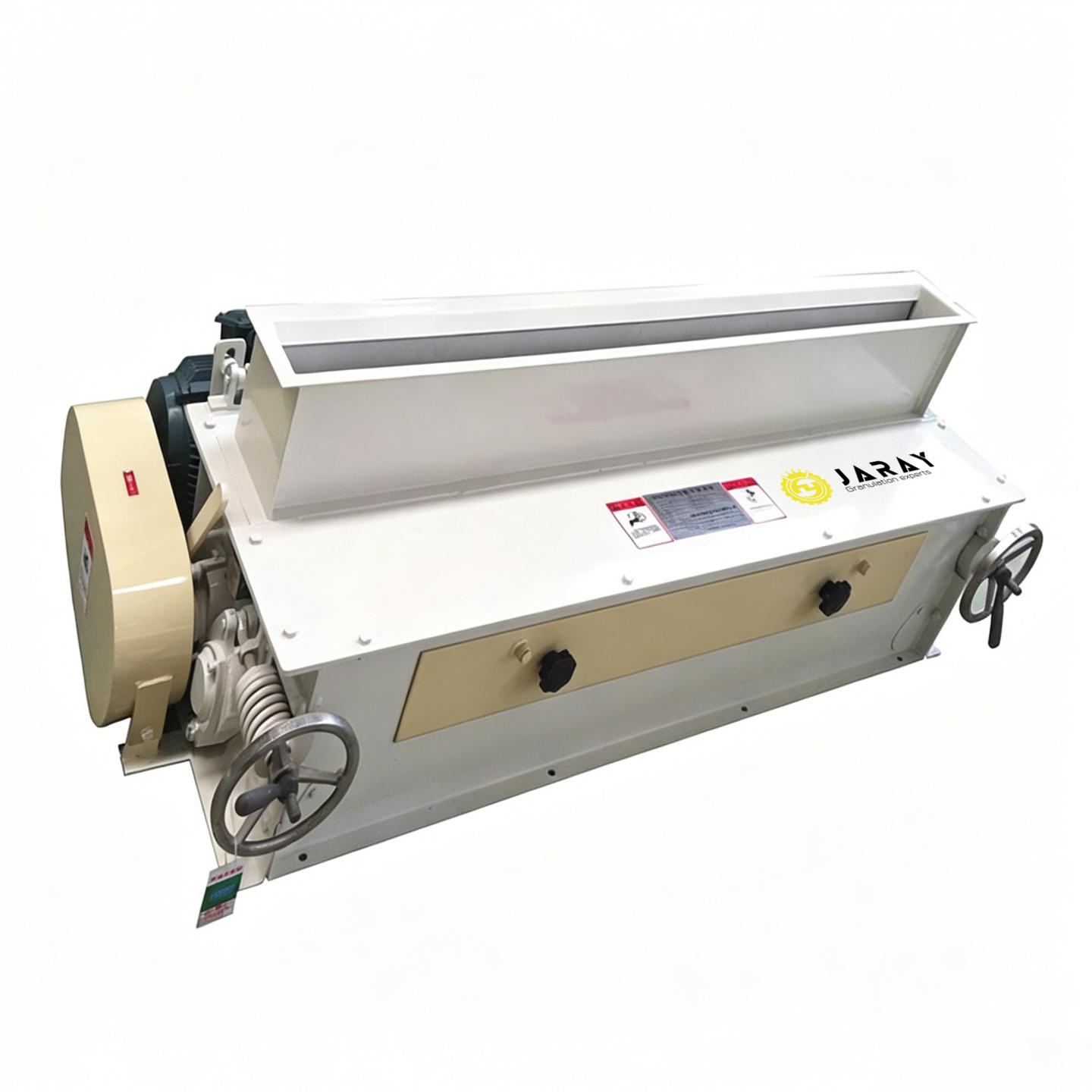
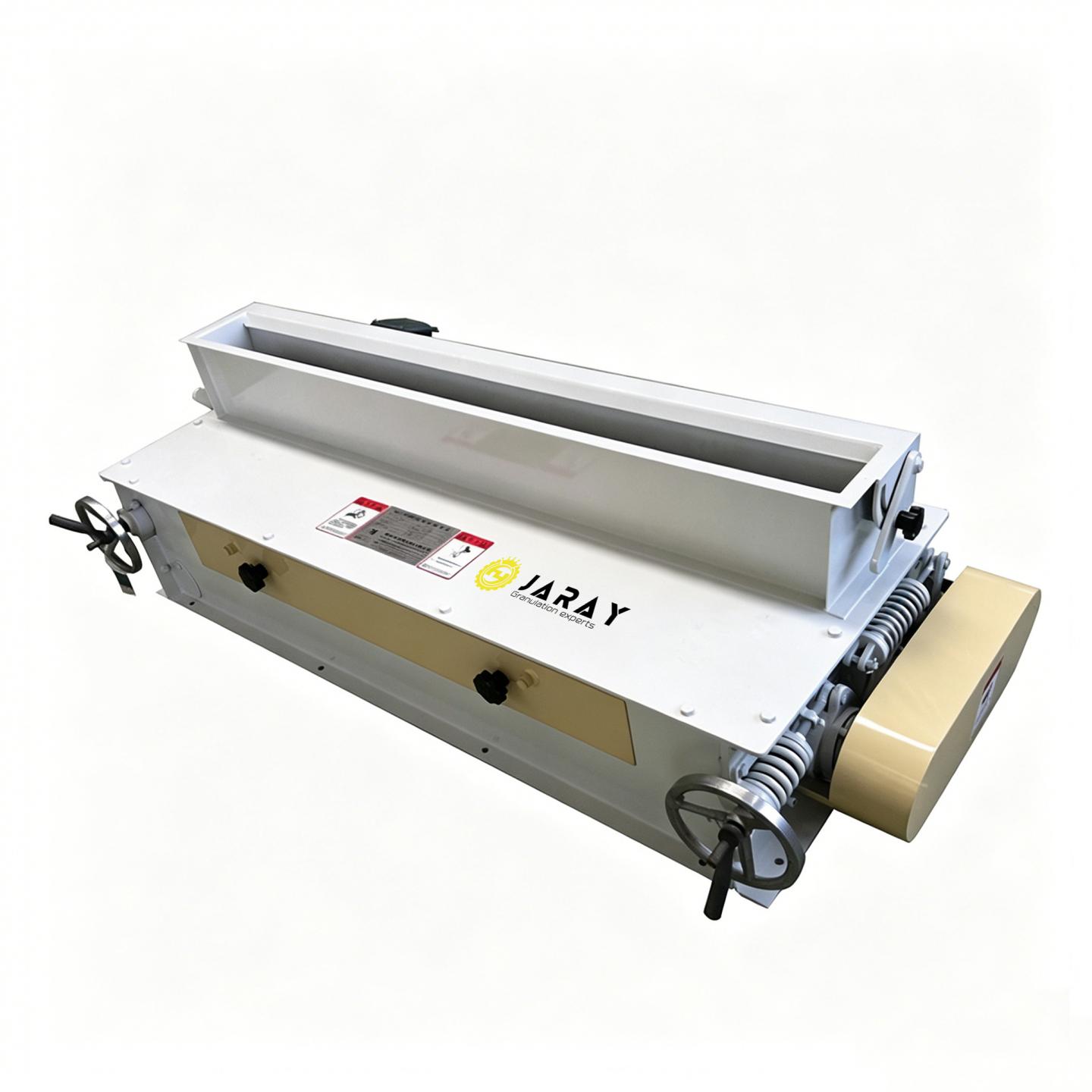
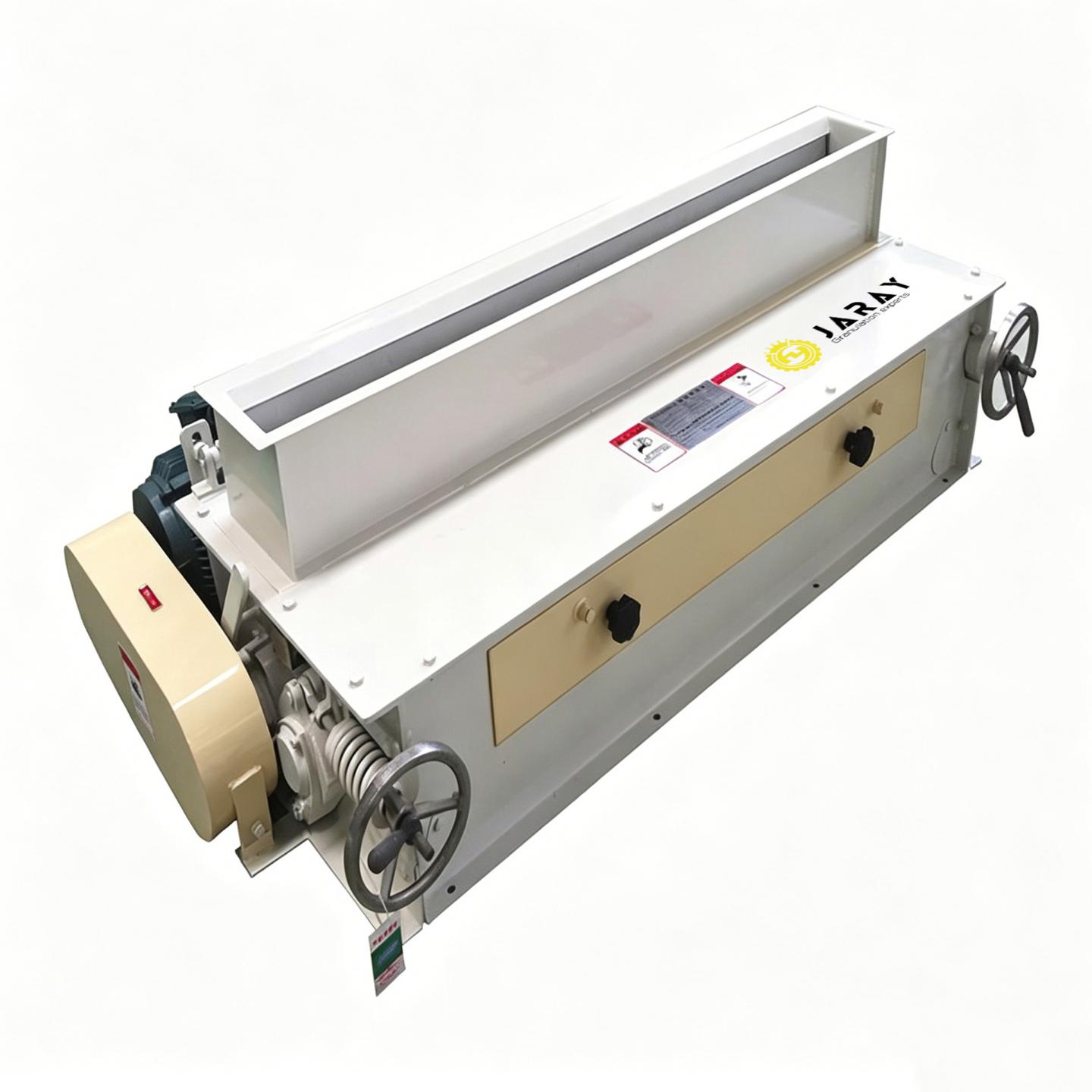
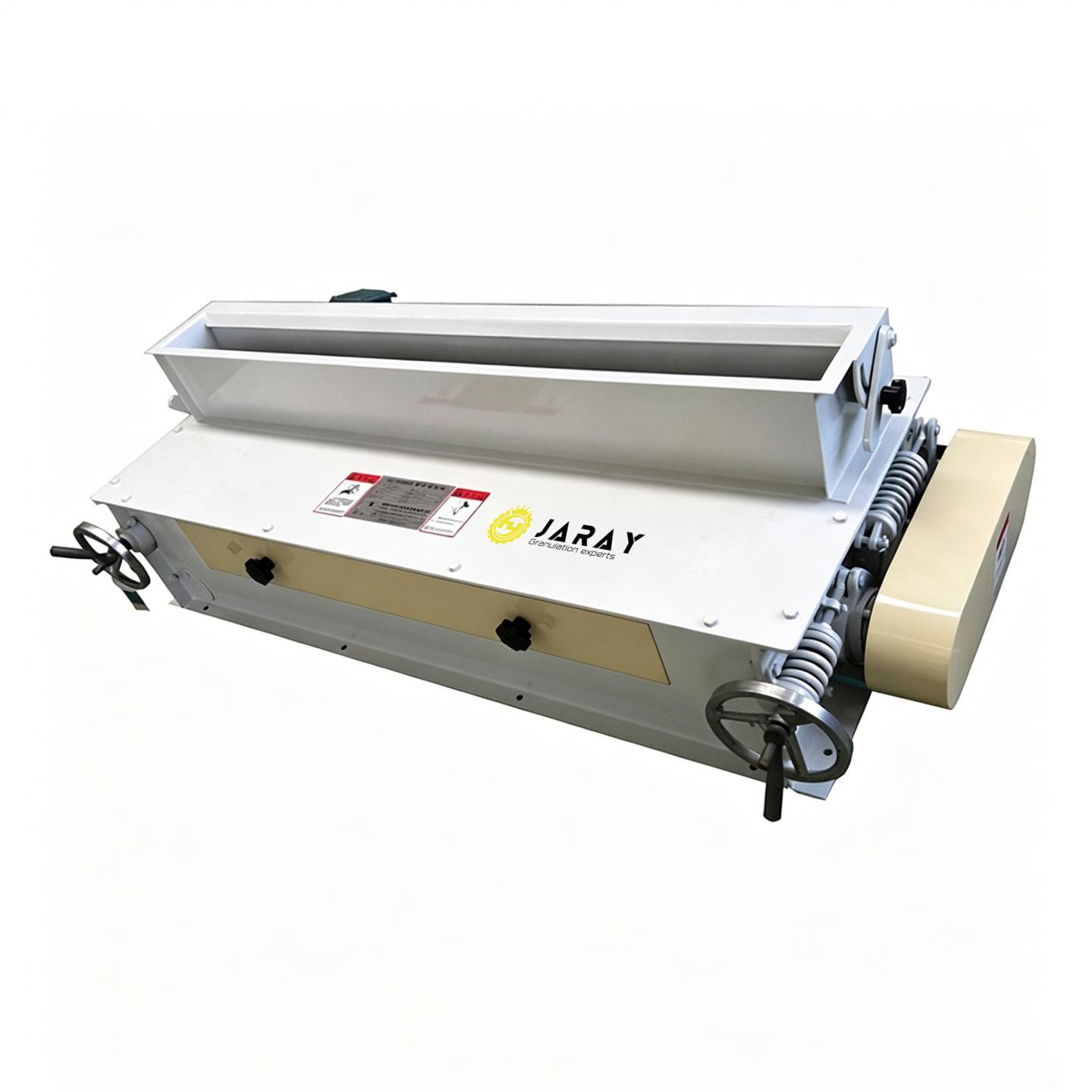
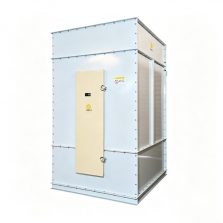
Not all finished feed needs to be delivered as large pellets. For young chicks, piglets, aquatic larvae, and certain pet foods, smaller and more easily consumed crumbled feed is required. The feed crumbler (granule crusher) is specially designed for this purpose. It takes formed pellets of Φ2.5–8mm and breaks them into uniform particles of 0.5–3mm by differencial counter-rotating rolls, while effectively controlling the amount of fines. This equipment has become standard in modern feed mills for producing crumbles, poultry feed, shrimp starter feed and other specialized products.

Equipment, Featured Products2026-05-14j21

Description


Feed Crumblier – The Key Tool for Granule Size Reduction in Feed Production

Not all finished feed needs to be delivered as large pellets. For young chicks, piglets, aquatic larvae, and certain pet foods, smaller and more easily consumed crumbled feed is required. The feed crumbler (granule crusher) is specially designed for this purpose. It takes formed pellets of Φ2.5–8mm and breaks them into uniform particles of 0.5–3mm by differencial counter-rotating rolls, while effectively controlling the amount of fines. This equipment has become standard in modern feed mills for producing crumbles, poultry feed, shrimp starter feed and other specialized products.
1. Equipment Overview and Working Principle

The feed crumbler is typically installed after the pellet mill (or cooler) and before the grading sieve. Its core components are one or two pairs of differentially rotating serrated rolls (or smooth/serrated and grooved rolls). The upper roll rotates at a lower speed, the lower roll at a higher speed, creating a speed differential. When cooled and hardened pellets enter the gap between the rolls, they are subjected to compressive and shearing forces, breaking into several smaller pieces.

By adjusting the roll gap (typically from 0.5mm to 3mm) and selecting rolls with different tooth patterns, final crumble size can be precisely controlled. The discharged material is then sieved through a grader; on-size crumbles are collected, while fines are returned to the pellet mill for re-pelleting.

2. Main Types and Structural Features

Based on the number of rolls, common crumbler types are:

  • Single-stage crumbler (one pair of rolls): simple structure, lower cost, suitable for small capacity or less demanding applications.

  • Double-stage crumbler (two pairs in series): material passes through two crushing steps, offering higher efficiency, more uniform particle size, and lower fines generation — ideal for large-scale continuous production.

Structural features:

  • Roll material: wear-resistant alloy cast steel or chilled cast iron with surface hardening; tooth patterns available as fine, medium or coarse.

  • Gap adjustment: manual or hydraulic quick adjustment; some models offer hydraulic quick-opening for cleaning and over‑load protection.

  • Independent drive: each roll driven by its own motor via V‑belts or a gearbox, with fixed or adjustable speed differential.

  • Magnetic separator: a permanent magnet drum or plate at the feed inlet prevents ferrous damage.

  • Bypass: when crushing is not required, a bypass door allows pellets to pass directly.

3. Core Advantages

  1. Uniform particle size
    By adjusting roll gap and selecting suitable teeth, crumble uniformity can reach ≥85%, reducing both excessive fines and oversized pieces, improving palatability and feed intake.

  2. Low fines, high yield
    Compared to hammer mills, roll crushing is based on compression and shear with low impact, significantly reducing powder generation. Fines content is generally ≤5% (depending on material and adjustment), more than 50% lower than hammer‑type crumbler.

  3. High capacity, low energy consumption
    Low roll speed (typically 2–6 m/s) means energy consumption is only 1/3 to 1/2 of a hammer mill. Capacity ranges from 3 to 20 t/h, meeting demands of medium and large feed mills.

  4. Compact structure, easy maintenance
    Horizontal design with small footprint. Removable bearing housings allow roll surface or bearing replacement without dismantling the whole machine. Quick‑access design simplifies cleaning.

  5. Stable operation, low noise
    Smooth low‑speed operation; with an optional sound enclosure noise can be kept below 75 dB(A).

  6. Full protection functions
    Automatic reversing to eject foreign objects on overload, plus mechanical spring or hydraulic overload protection, safeguarding rolls and drive.

4. Typical Applications

  • Poultry feed: Breaking 3–5mm pellets to 1–3mm crumbles for starter and grower rations, improving digestibility.

  • Piglet feed: Producing crumbles used in starter or creep feed — small particles easy for piglets to consume.

  • Aquafeed: Shrimp, crab, frog larvae require broken feed (0.5–1.5mm) as a cost‑effective alternative to micro‑extruded feed.

  • Pet food: Lightly breaking large kibble into smaller uniform pieces for small dogs or senior pets.

  • Specialty feeds: Particle size reduction for fur animals, ornamental birds, laboratory animals.

5. Selection Guide

  1. Capacity matching: Choose a crumbler whose capacity is at least 1.1 times the output of the upstream pellet mill.

  2. Target crumble size: For fine (<1mm) crumbles, choose double‑stage fine‑tooth rolls; for coarse (2–3mm), single‑stage medium/coarse teeth may suffice.

  3. Material characteristics: Oily or high‑moisture (>13%) pellets tend to stick — select rolls with scrapers, heated rolls, or PTFE coating.

  4. Installation space: Pay attention to machine height; double‑stage units require more headroom.

  5. Automation level: Prefer pneumatic gap adjustment, PLC integration and hydraulic overload protection for coordinated operation with upstream/downstream equipment.

6. Maintenance and Care

  1. Roll gap check: Measure and adjust gap as required each shift, ensuring the gap is uniform across the roll width.

  2. Roll surface: Inspect tooth wear; when tooth height wear exceeds 1/3, replace or refurbish rolls. Clean adhered material regularly.

  3. Bearings: Grease every 500 operating hours with high‑temperature grease; check bearing condition every 2000 hours.

  4. Drive belts: Check tension monthly to avoid speed fluctuation from belt slip.

  5. Magnetic separator: Clean collected iron particles each shift.

  6. Hydraulic system (if equipped): Check oil level and for leaks; change oil every six months.

Conclusion

The feed crumbler is an essential equipment for product diversification, improving feed intake and enhancing feed conversion rate. Roll‑type crumbler, with its uniform particle size, low fines, energy efficiency, and easy maintenance, has become the core machine in the post‑pelletizing section of modern feed mills. Whether you produce poultry feed, piglet feed, aquafeed crumbles or pet food, proper selection and maintenance of a crumbler will give your feed products a competitive edge. We offer a full line of single‑stage and double‑stage crumbler models with customizable roll surfaces and automation integration. Please contact us for consultation or sample testing.

Inquiry Us


Related Products

TFPX Series Rotary Distributor

2026-05-13j21

SCY Series Cylinder Cleaning Sieve

2026-05-13j21

SKLB Series Swing Cooler

2026-05-13j21

Product Categories

  • Ring Dies
  • Roller Shells
  • Pellet Machine
  • Equipment
  • Accessories
  • Featured Products

Product Tags

BUHLER Closed tooth Roller Shell cpm CPP Fishbone type roller shell Hammer Blades Hammer Mill Hammer Mill Screens Helical roller shell Hole type roller shell IDAH LAMEC muzl pellet mill ring die Roller shell Roller shell assembly Screens Slicer Blades Stepped roller shell SZLH TPM TPN Van Aarsen Wood Pellet Ring die YULONG

Latest Post

  • Jaray Company Enhances Ring Die Bore Quality with German BOTEK Gun Drills and Japanese Nachi Drill Bits
    2024-10-31
  • Ho Chi Minh City, Vietnam – October 10, 2023
    2023-10-10
  • JARAY Pellet Mill Die Company Shines at 2024 Russia Exhibition, Driving Innovation in Pellet Processing
    2024-08-12

Email Newsletters

If you are interested in our products, please contact us via e-mail newsletter, and our engineers will provide you with the best ring die pelletizing solution!

Contact Us

1476972539

+86-186-51204359

info@jarayco.com

Sirish581

No.6 Jingyi road, Liyang city, Jiangsu province, China

Mobile Website

Copyright © 2012-2025 jaray machinery manufacturing Co.,Ltd. All Rights Reserved