
+8618651204359
info@jarayco.com
8618651204359

Facebook
Twitter
Google+
LinkedIn
Pinterest

  • Home
  • About Us
  • Products
    • Ring Dies
    • Pellet Machine
    • Equipment
    • Roller Shells
    • Accessories
    • Featured Products
  • News
  • Contact
  • Feedback
  • Download

SSHJ Double-Shaft Mixer

Home Equipment SSHJ Double-Shaft Mixer

SSHJ Double-Shaft Mixer

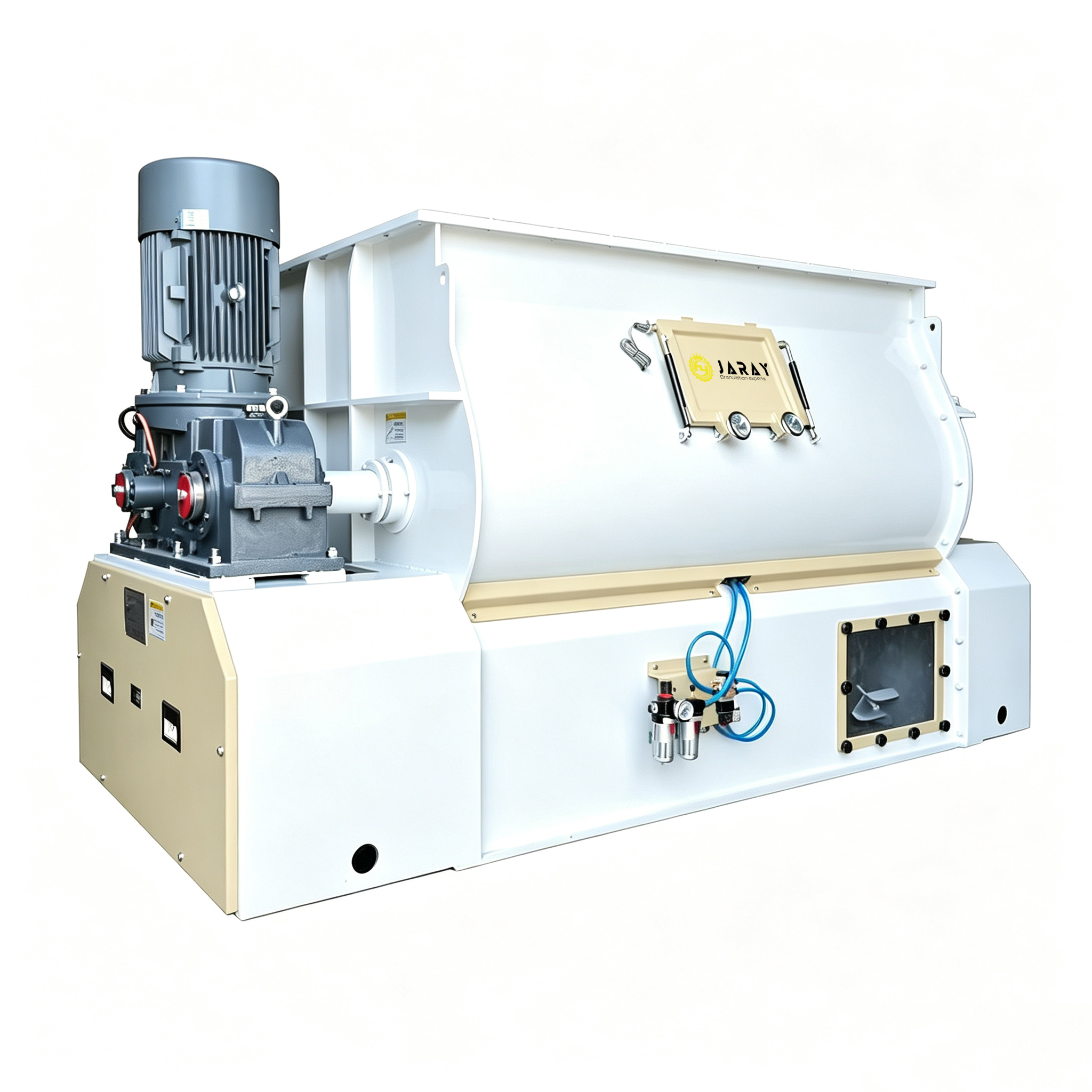
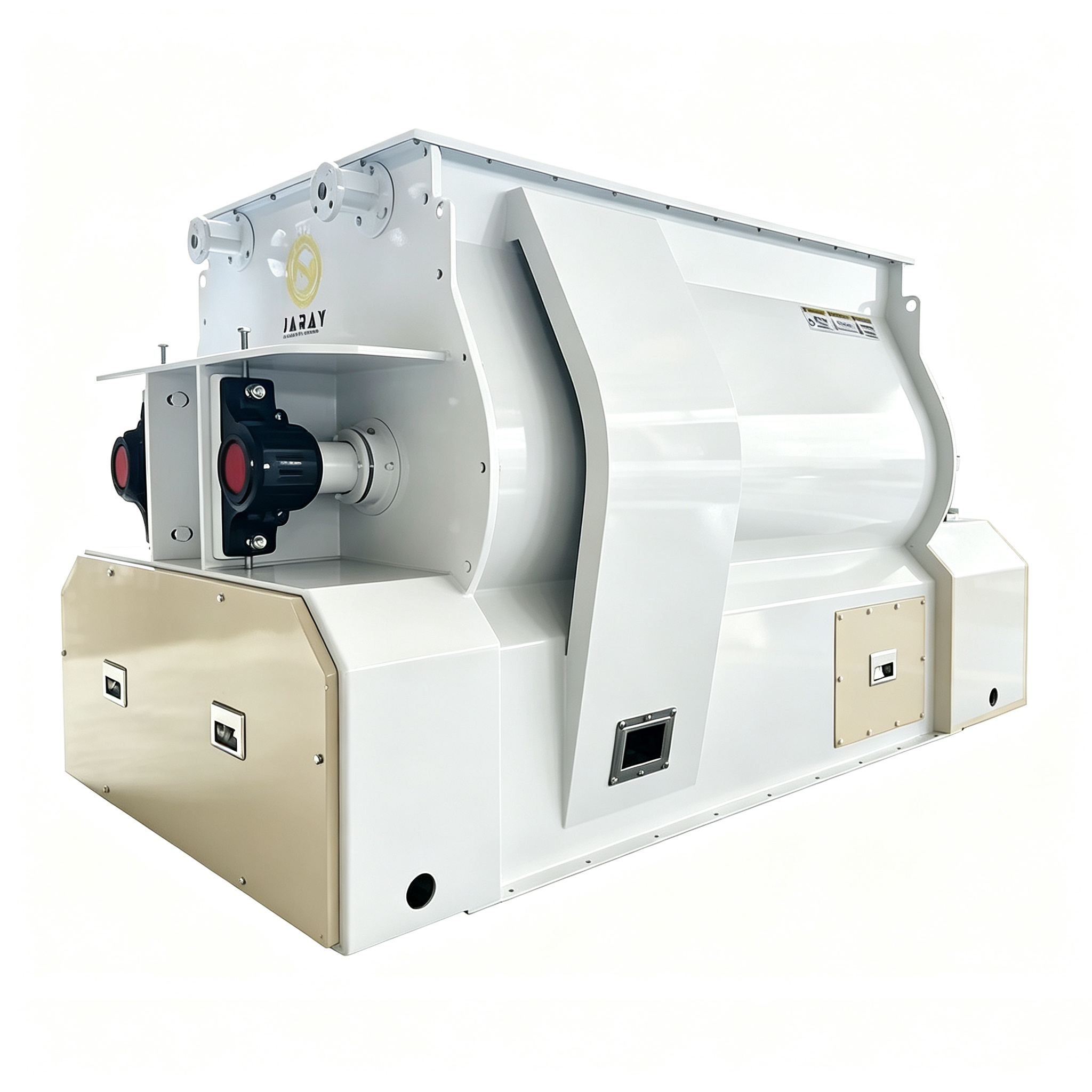
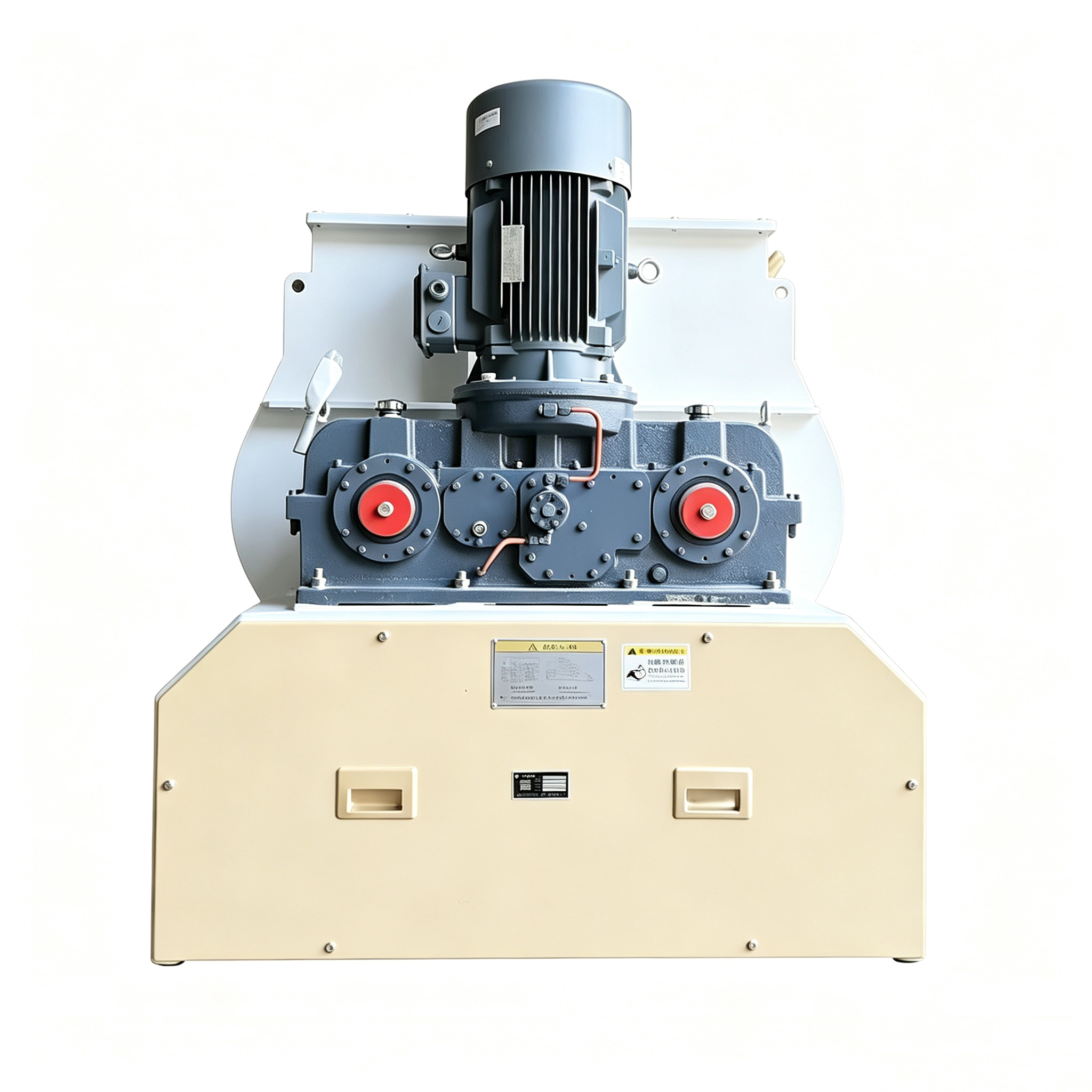
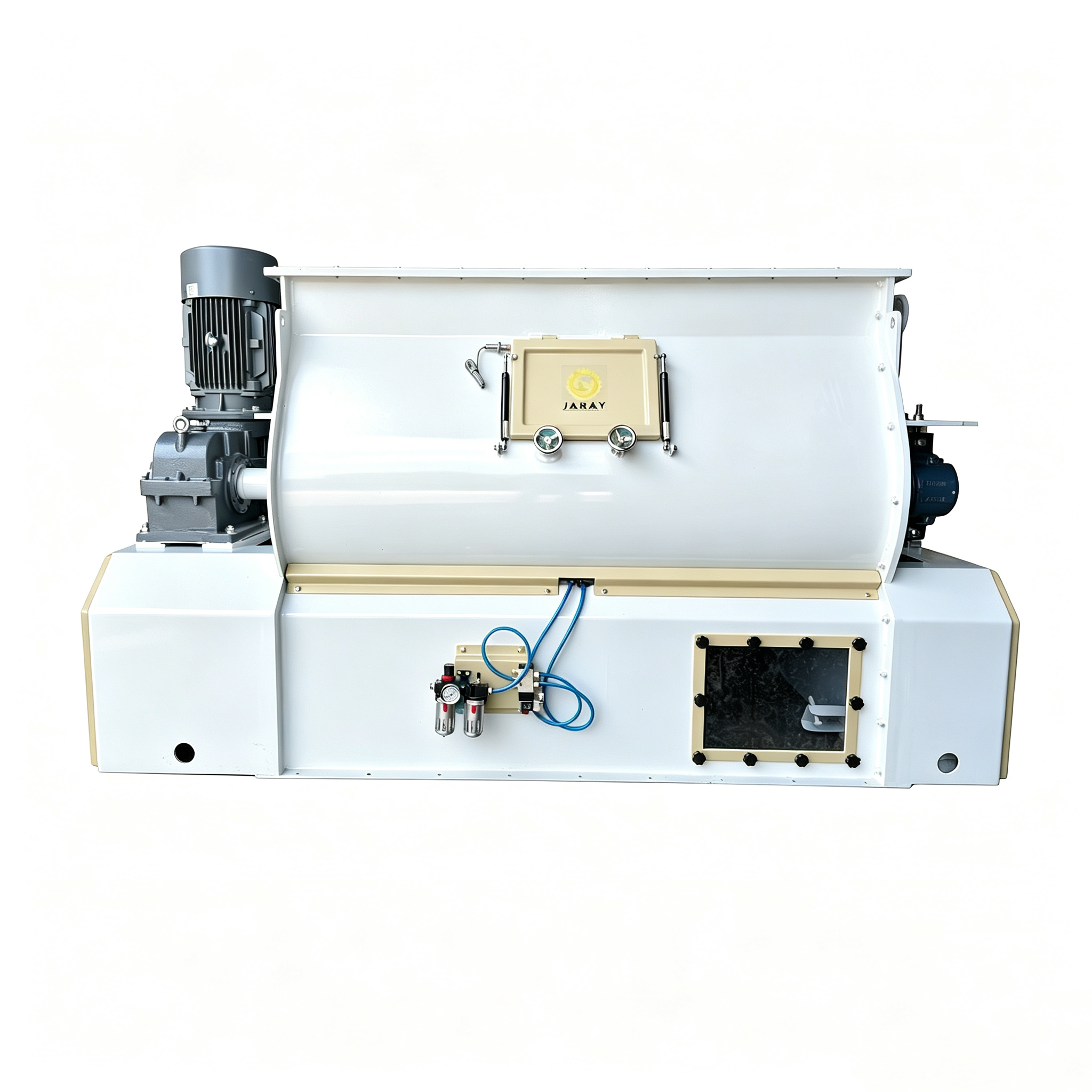
The SSHJ double-shaft mixer (also known as SSHJ twin-shaft paddle mixer) is one of the most widely used mixing devices in modern feed processing and powder engineering. The machine employs two parallel counter-rotating paddle shafts and utilizes the principle of zero-gravity mixing to achieve both macro and micro homogeneous mixing in a very short time. Its excellent mixing performance, extremely low residue, and high degree of automation have made it the preferred choice for livestock feed, aquafeed, premixes, additives, food ingredients, and chemical powder production lines.
Equipment, Featured Products2026-05-13j21

Description

SSHJ Double-Shaft Mixer – High-Efficiency, Low-Residue Powder Mixing Expert

The SSHJ double-shaft mixer (also known as SSHJ twin-shaft paddle mixer) is one of the most widely used mixing devices in modern feed processing and powder engineering. The machine employs two parallel counter-rotating paddle shafts and utilizes the principle of zero-gravity mixing to achieve both macro and micro homogeneous mixing in a very short time. Its excellent mixing performance, extremely low residue, and high degree of automation have made it the preferred choice for livestock feed, aquafeed, premixes, additives, food ingredients, and chemical powder production lines.
1. Structural Features of SSHJ Double-Shaft Mixer

The SSHJ series is of horizontal construction, with main components including:

  • Body: Welded from high-quality carbon steel or stainless steel, rigid with smooth, dead-angle-free inner surfaces.

  • Twin paddle rotors: Two parallel shafts equipped with multiple specially angled paddles made of wear-resistant alloy or stainless steel with polished surfaces.

  • Transmission system: Gear reducer or belt drive, smooth operation with low noise. Belt drive saves about 20% energy compared to chain drive.

  • Discharge door mechanism: Full-bottom large-opening design with opening angle ≥90°, ensuring instantaneous emptying of material.

  • Liquid addition system: Optional multi-nozzle atomizing spray system suitable for adding oils, molasses, water, etc.

  • Seals: Shaft ends use packing seals or air seals; discharge door has rubber sealing strips, ensuring no leakage.

  • Air return system: Unique return air duct design balances airflow during feeding, preventing dust escape.

2. Working Principle

When the machine starts, the two paddle shafts rotate in opposite directions (generally outward). The helical arrangement of paddles generates three-directional compound motion of the material:

  1. Radial motion: Material is thrown up along the inner wall of the trough.

  2. Axial motion: Material flows from ends to center or from center to ends.

  3. Zero-gravity zone mixing: In the overlapping area of the two rotors, material is momentarily weightless, allowing particles to float freely for segregation-free mixing.

This three-dimensional mixing action enables the material to reach CV ≤5% mixing uniformity within 30–120 seconds, and premium models can achieve CV ≤2.5%. After mixing, the discharge door opens quickly, and material falls by gravity into the next process, with in-machine residue below 0.1%.

3. Core Advantages

  1. High mixing uniformity: The zero-gravity principle ensures homogeneous mixing of materials with different densities and particle sizes without segregation. Ideal for premixes containing trace ingredients.

  2. Fast mixing, low energy consumption: Only 30–120 seconds per batch, with energy consumption per unit output far lower than other mixer types.

  3. Extremely low residue: Full-bottom large opening combined with cleaning devices keeps residue below 0.1%, greatly reducing cross-contamination between formulations. For critical applications, a compressed air purge system is available, achieving near-zero residue.

  4. Good sealing, clean operating environment: Multiple shaft seals, elastic discharge door seals, and return air system ensure no dust escape, meeting environmental standards.

  5. Strong adaptability: Can mix powders, granules, flakes, sticky materials, and small amounts of liquids. Material moisture content in the range of 12%–25% works well.

  6. Robust construction, easy maintenance: Clearance between paddles and casing is controlled within 3mm, ensuring no dead zones. A large inspection door on top allows easy cleaning and paddle replacement.

  7. Intelligent control: Can be integrated into a PLC system for automatic feeding, mixing, discharging, liquid addition, and coordination with upstream/downstream equipment.

4. Typical Applications

  • Feed industry: Producing complete compound feed, concentrates, premixes, pre-mixing for extruded aquafeed, pet food ingredient mixing.

  • Food industry: Mixing flour, starch, milk powder, additives, seasonings, nutritional fortifiers and other powders.

  • Chemical and pharmaceutical industries: Mixing wettable pesticide powders, pigments, dyes, fertilizers, detergent powders, pharmaceutical intermediates.

  • Other industries: Biomass materials, dry-mix mortar, refractories, ceramic powders, etc.

5. Model Parameters & Selection Guide

The SSHJ series offers effective volumes from 0.1m³ to 12m³, with batch outputs from 50kg to 6,000kg. Common models include SSHJ1 (1m³, approx. 500kg/batch), SSHJ2 (2m³, approx. 1000kg/batch), SSHJ4 (4m³, approx. 2000kg/batch), etc.

Selection considerations:

  • Batch output: Calculate required batch volume based on line capacity and mixing cycle.

  • Material characteristics: Carbon steel for ordinary feed; stainless steel (304 or 316L) for premixes, food, pharmaceuticals.

  • Liquid addition requirements: When adding oils or molasses, atomizing nozzles and corresponding pumping systems must be configured.

  • Installation method: Typically placed below the batching scale, with discharge port connected to a buffer bin or screw conveyor.

  • Hygiene level: Food-grade requires mirror polishing, no-dead-corner design, and quick-opening cleaning structures.

6. Maintenance & Care

  1. Inspect discharge door seals after each shift; clean residual material around the door.

  2. Check paddle wear weekly; measure paddle-to-casing clearance; if exceeding 3mm, adjust or replace paddles.

  3. Check gearbox oil level monthly; change gear oil after first 500 hours of operation, then every 2000 hours or six months.

  4. Regularly clean return air ducts and dust extraction ports to prevent dust buildup.

  5. Lubricate bearings with high-temperature grease every 1000 operating hours.

  6. Before long-term shutdown, thoroughly clean the mixer interior and keep it dry.

7. Common Problems & Solutions

Problem Possible Cause Solution
Poor mixing uniformity Insufficient mixing time, worn paddles, incorrect feeding sequence Extend mixing time, replace paddles, improve sequence
Discharge door leakage Worn seals, low cylinder pressure, deformed door Replace seals, adjust air pressure, straighten door
Motor overload Overfeeding, foreign objects in chamber, bearing seizure Reduce batch size, remove foreign objects, repair bearings
Excessive vibration Missing or imbalanced paddle, loose anchor bolts Tighten or replace paddles, tighten anchor bolts
Dust escape Blocked return air duct, failed seals Clear return air duct, replace shaft seals

Conclusion

The SSHJ double-shaft mixer, with its outstanding performance including high uniformity, low residue, high efficiency, and wide adaptability, has become the benchmark equipment in modern powder mixing processes. Correct selection, proper operation, and regular maintenance will effectively ensure product quality, reduce production costs, and enhance enterprise competitiveness. We offer a full range of SSHJ mixers and supporting solutions. Welcome to contact us for inquiries or sample testing.

Model Effective capacity(m³) Capacity per batch(kg) Mixing time(s) Per batch mixing(CV%≤) Power(kw)
SSHJ0.1 0.1 50 30-120 5 2.2/3
SSHJ0.5 0.5 250 30-120 5 5.5/7.5
SSHJ2 2 1000 30-120 5 15/18.5
SSHJ4(S) 4 2000 30-120 5 22/30
SSHJ8(S) 8 4000 30-120 5 45/55

Inquiry Us


Related Products

SKLB Series Swing Cooler

2026-05-13j21

SZLH series ring die

2021-07-27j21

YULONG series ring die

2026-04-30j21

Product Categories

  • Ring Dies
  • Roller Shells
  • Pellet Machine
  • Equipment
  • Accessories
  • Featured Products

Product Tags

BUHLER Closed tooth Roller Shell cpm CPP Fishbone type roller shell Hammer Blades Hammer Mill Hammer Mill Screens Helical roller shell Hole type roller shell IDAH LAMEC muzl pellet mill ring die Roller shell Roller shell assembly Screens Slicer Blades Stepped roller shell SZLH TPM TPN Van Aarsen Wood Pellet Ring die YULONG

Latest Post

  • Jaray Company Enhances Ring Die Bore Quality with German BOTEK Gun Drills and Japanese Nachi Drill Bits
    2024-10-31
  • Ho Chi Minh City, Vietnam – October 10, 2023
    2023-10-10
  • JARAY Pellet Mill Die Company Shines at 2024 Russia Exhibition, Driving Innovation in Pellet Processing
    2024-08-12

Email Newsletters

If you are interested in our products, please contact us via e-mail newsletter, and our engineers will provide you with the best ring die pelletizing solution!

Contact Us

1476972539

+86-186-51204359

info@jarayco.com

Sirish581

No.6 Jingyi road, Liyang city, Jiangsu province, China

Mobile Website

Copyright © 2012-2025 jaray machinery manufacturing Co.,Ltd. All Rights Reserved