Description
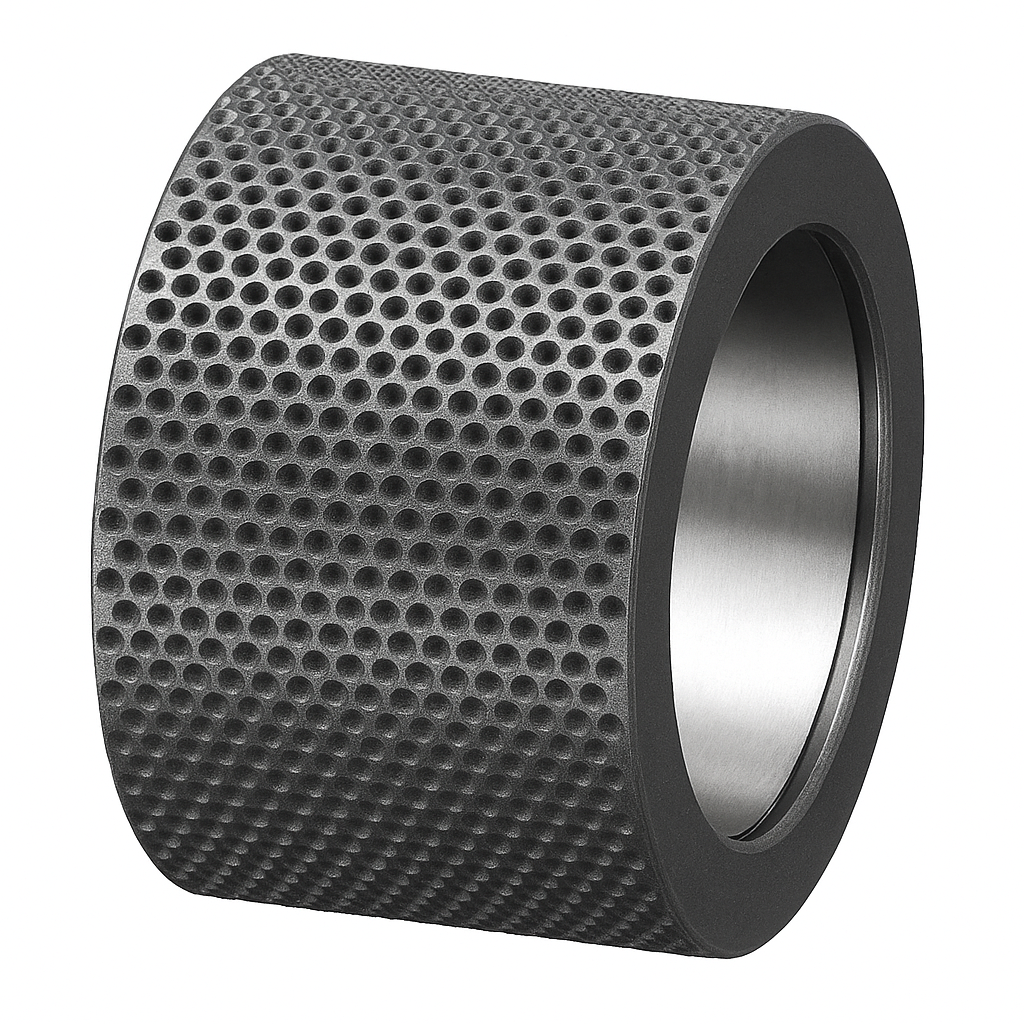
The vertical diamond hole arrangement roller shell is a non-continuous surface design for pellet mill rollers, featuring circular or elliptical blind holes/through holes arranged in a vertical diamond-shaped array on its working face. Unlike conventional continuous groove-type rollers, this discrete hole-array design creates an “island-valley” alternating contact pattern on the roller surface, providing micro-scale material tumbling and mixing effects while compressing the material. The vertical diamond arrangement ensures staggered hole positions, effectively eliminating continuous stress concentration zones on the roller surface. This design is particularly suitable for sticky materials, high-moisture materials, and granulation scenarios requiring gentle kneading without excessive shearing.
Q: What is the essential difference in material compression mechanism between a vertical diamond hole arrangement roller shell and a continuous groove-type roller shell?
A: A continuous groove-type roller applies continuous shearing and extrusion along the groove direction, with material flow paths guided by the groove pattern. In contrast, the hole array of a vertical diamond hole arrangement roller creates a non-continuous contact surface. Material experiences primary compression on the “land” areas between holes and momentary pressure relief within the hole areas. This periodic “compression-relief-recompression” mechanism effectively expels entrapped air and free moisture from the material while avoiding continuous fiber cutting. This is particularly critical for high-air-content fermented materials or raw materials with fluctuating moisture levels.
Q: How do the hole parameters of a vertical diamond hole arrangement roller shell affect pelletizing performance, and how can excessive wear on the lands between holes be prevented?
A: Hole diameter (typically φ4-10mm), hole depth (2-6mm), and hole spacing (wall thickness 2-5mm) together determine the surface opening ratio (recommended 30%-50%). Smaller diameters combined with deeper holes suit high-compression-ratio materials; larger diameters with shallower holes suit highly sticky materials. Measures to prevent land wear include: using powder metallurgy high-speed steel or tungsten carbide composite coating materials; applying micro-scale oil-retaining textures on land surfaces for self-lubrication; periodic roll flipping to ensure uniform wear. Replacement is required when the remaining land width falls below 50% of the original wall thickness.